 Citenook1
Blog · Comparisons
NotebookLM vs ChatGPT, Claude and Perplexity: which to use
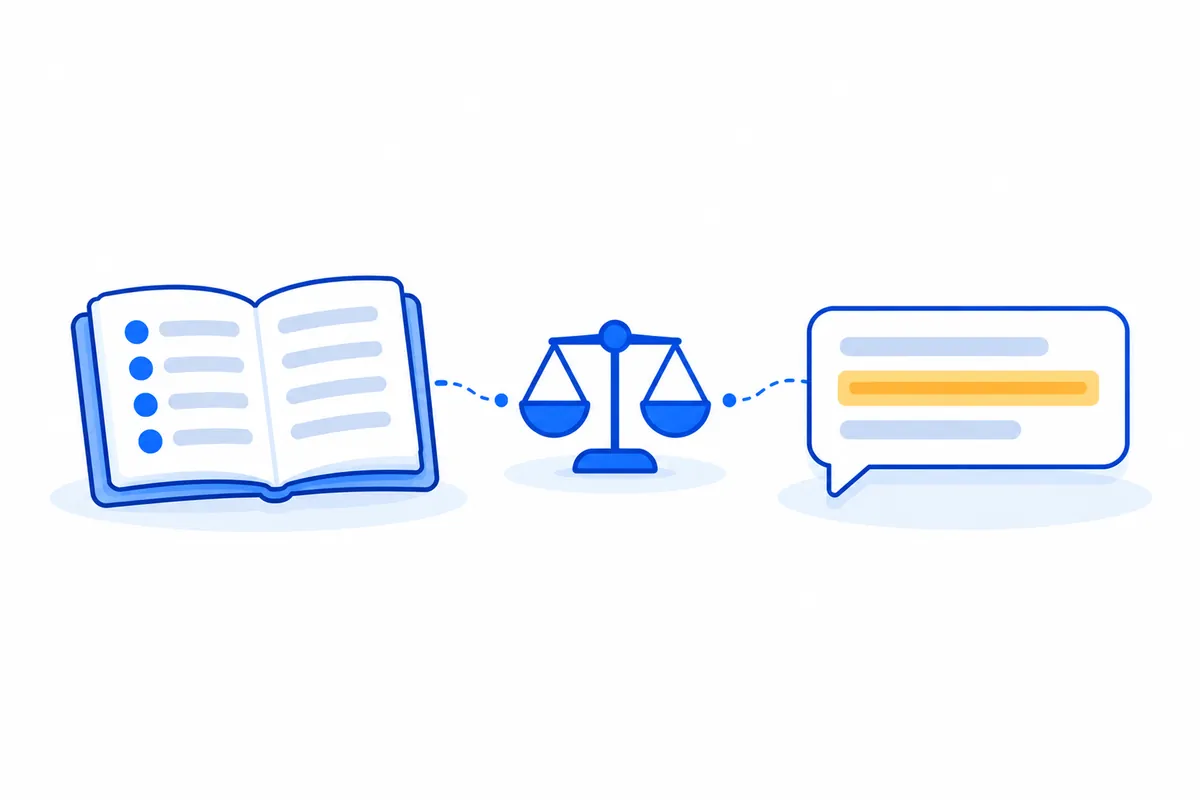
NotebookLM, now Gemini Notebook, answers only from the sources you add and ties each point to a numbered citation, plus Audio Overviews, flashcards and quizzes. ChatGPT and Claude answer from your files, their own knowledge and the web, which makes them better for writing and broader questions but harder to check. Perplexity is best when you need current web sources alongside your files. Pick NotebookLM to study or verify, ChatGPT or Claude to write and think.
This guide compares the four on how they answer, file limits, citations, study tools, privacy and price, and shows a real test: the same question about the same two made-up project files in each. Facts come from each company's help pages, checked on 23 October 2026. NotebookLM was renamed Gemini Notebook in July 2026; both names mean the same product here.
Side by side
| Tool | Answers from | Files | Cites each point |
|---|---|---|---|
| NotebookLM | Your sources only | 50 free, up to 600 paid | Yes |
| ChatGPT Projects | Model, web and files | 5 free, 25 to 40 paid | Not shown |
| Claude Projects | Model, files and web | No file-count cap | Not shown |
| Perplexity Projects | Web and files | Varies by plan | Web sources |
| Tool | Study tools | Trains on chats | Paid from |
|---|---|---|---|
| NotebookLM | Many | No | $4.99 |
| ChatGPT Projects | Some | Unless turned off | $20 |
| Claude Projects | None found | If you allow it | $20 |
| Perplexity Projects | None found | Unless turned off | $17 |
Personal plans, per month. "Not shown" means the company doesn't document per-file citations. Study tools: NotebookLM has Audio and Video Overviews, flashcards, quizzes, slides and mind maps; ChatGPT has study mode, flashcards and quizzes, but study mode doesn't work inside Projects. Claude's paid plans hold about ten times more in a project; Perplexity's $17 is billed yearly. Google AI prices as checked 8 October; the rest on 23 October.
Our test: the same files, four AIs
We gave each tool the same two made-up files, a project statement of work and kickoff call notes, and asked: "When is the production launch, and what could delay it?" Gemini Notebook got them as sources; ChatGPT (in a Temporary Chat) and Claude (in an Incognito chat) got them pasted into one message; the Gemini app used the same notebook.
| Tool | Launch date | Risks found | How it showed sources |
|---|---|---|---|
| Gemini Notebook | Right | 6, including a production change freeze | Numbered citations on each point |
| Gemini app | Right | 5; missed the change freeze | Chips that name the file |
| ChatGPT | Right | 6, in a table, plus a milestone timeline | "According to the Statement of Work" once |
| Claude | Right | 9, plus today's status and next steps | Named the document in the text |
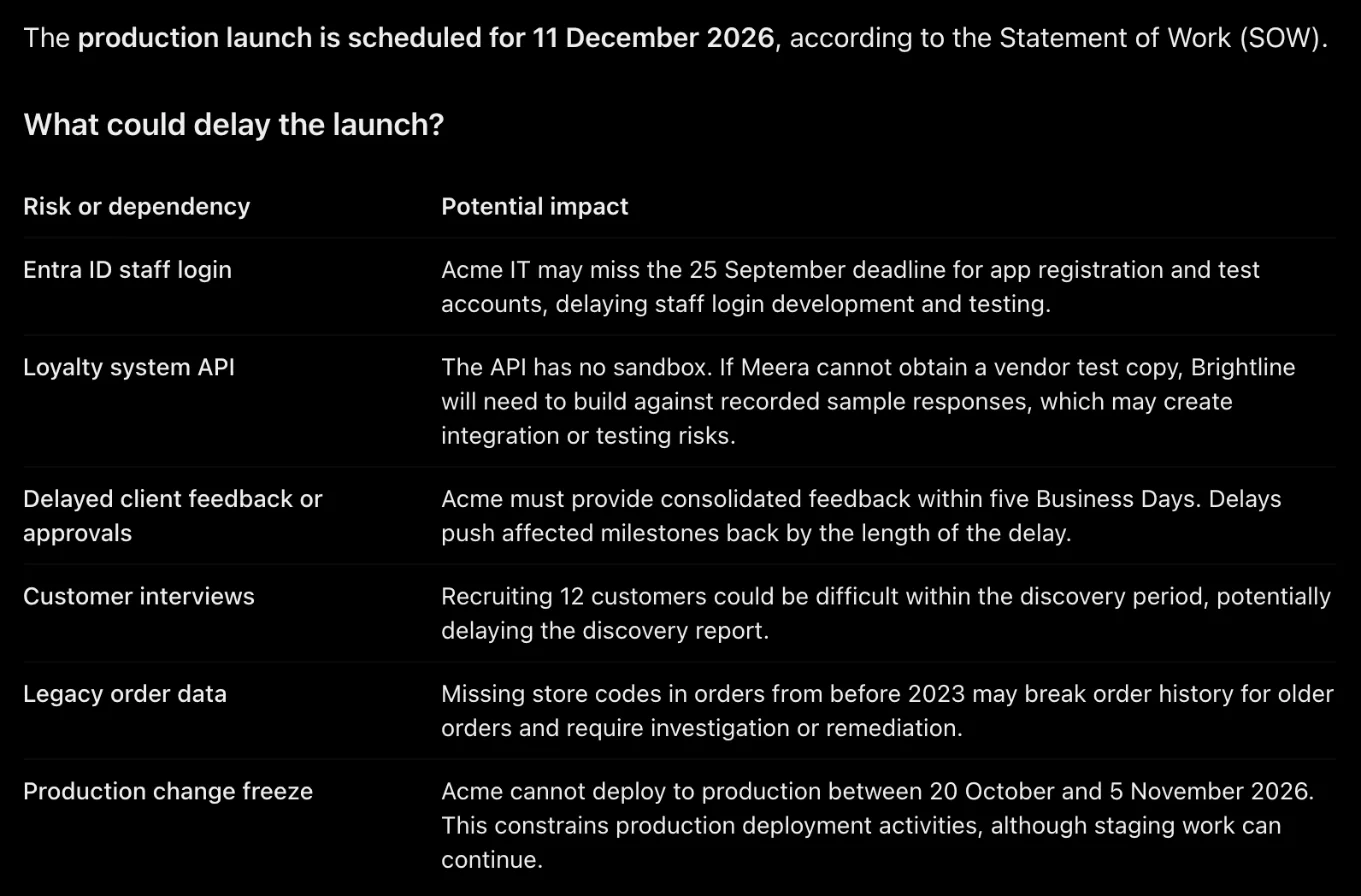
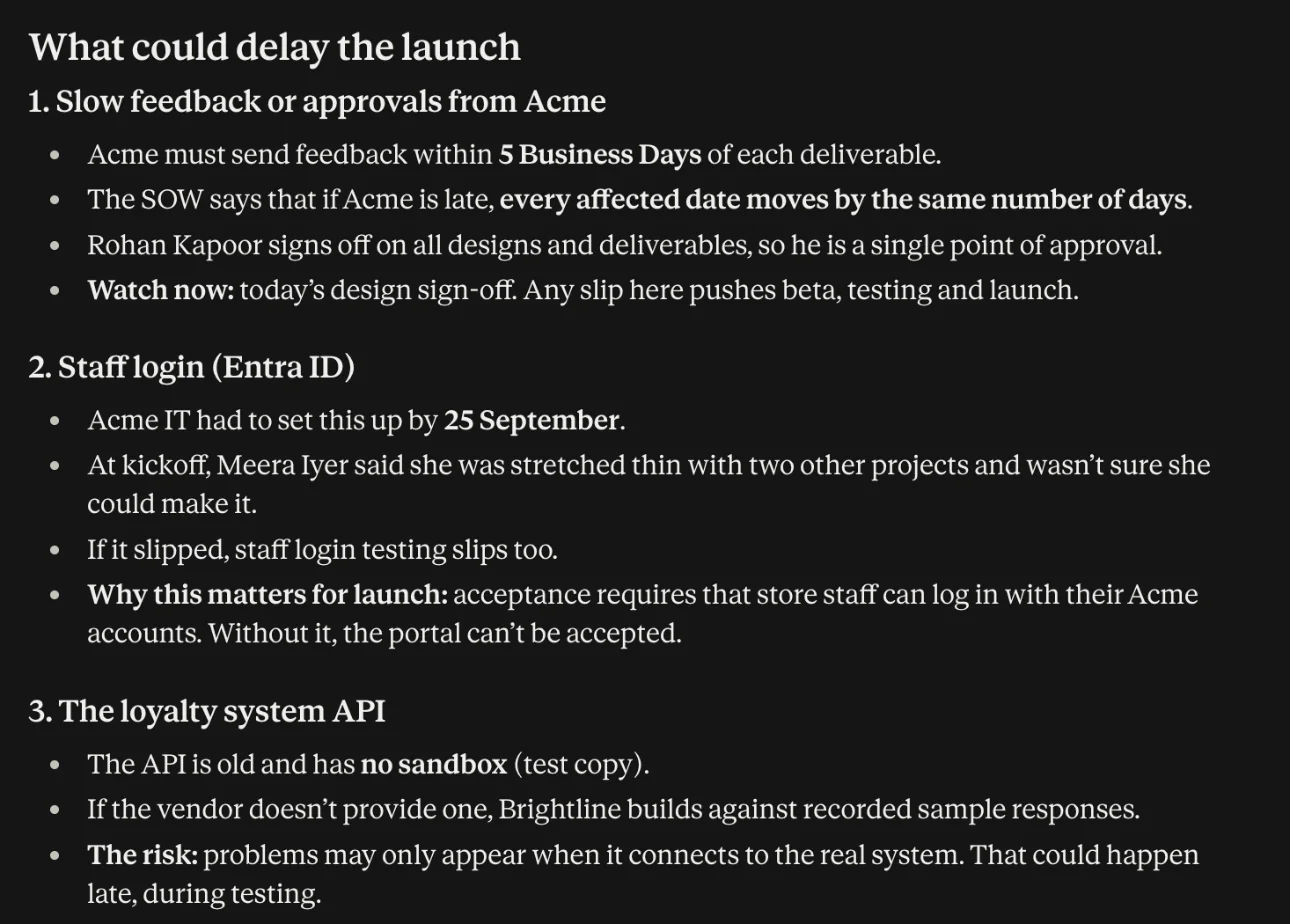
All four got the date right. Claude went furthest: it noticed the files were from August and September, worked out where the project stood on the day we asked, and pointed out a referenced contract it didn't have. But only Gemini Notebook let us click each claim back to its source. For checking, that matters more than length.
Where NotebookLM wins
- Answers only from your sources. Google says chat responses "only use data from your sources," with direct quotes as citations.
- Study tools in one place: Audio Overviews in 80+ languages, flashcards, quizzes, slide decks and mind maps from the same notebook.
- More sources: 50 per notebook free, against 5 files in a free ChatGPT project.
- Privacy default: Google says your content "will not be used to directly train" its models unless you send feedback.
Its limits: it won't answer beyond your sources, can refuse very creative requests, and is cloud only. See NotebookLM's limitations.
Where ChatGPT wins
- Writing and broad questions, mixing your files with general knowledge and web search.
- Projects with memory and sharing: project-only memory, and sharing with up to 100 people on Pro.
- Study tools now exist: study mode, flashcards and quizzes, though study mode doesn't run inside Projects.
- Deep research reports with source links on paid plans.
Watch out: personal plans train on your chats unless you turn it off. Limits are in ChatGPT's upload limits.
Where Claude wins
- Long documents and careful reasoning: chat context up to 1 million tokens on recent models, and Projects that expand about tenfold on paid plans.
- No file-count cap in Projects, with each file up to 30 MB.
- Thoughtful answers, as our test showed, though without documented per-file citations.
It has no audio overviews or study tools. Privacy details in is Claude safe.
Where Perplexity wins
Perplexity is a search engine first. Its Projects, renamed from Spaces in July 2026, keep files, instructions and searches together, and paid plans can search your files alongside the web. Long files are summarized by pulling out "the most important parts," so it's better for current research than for a careful read of your own documents. Personal plans keep data for training unless you turn it off.
Which should you use?
- Studying from course files: Gemini Notebook.
- Checking what a document really says: Gemini Notebook, for the citations.
- Writing, planning and analysis: ChatGPT or Claude.
- Very long documents: Claude.
- Finding new, current sources: Perplexity, then add the best ones to a notebook.
- Confidential files: none of these, since all four upload your files.
Comparing NotebookLM with Google's own chatbot? See NotebookLM vs Gemini. More options in the best NotebookLM alternatives.
When your files can't be uploaded
All four tools send your files to their company's servers. Citenook is a Mac app that answers from folders on your Mac with a model running there, and links every answer to the exact sentence, like NotebookLM's citations but without uploading anything. It has no audio overviews, flashcards or slides, on-device models write simpler answers, and it's Mac only. See Citenook vs Gemini Notebook.
Questions
Is NotebookLM better than ChatGPT?
For studying and checking your own documents, yes: it answers only from your sources with citations and has study tools. For writing and broad questions, ChatGPT does more.
Can ChatGPT do what NotebookLM does?
Partly. ChatGPT Projects hold files and chats, and ChatGPT now has study mode, flashcards and quizzes. It doesn't limit answers to your sources or make Audio Overviews, and per-file citations aren't documented.
NotebookLM vs ChatGPT Projects: what's the difference?
A notebook answers only from its sources, holds up to 50 free, and cites each point. A ChatGPT project holds 5 files free or 25 on Plus, and answers can also use the web and the model's knowledge.
Is NotebookLM or Claude better for documents?
NotebookLM for cited answers and study tools; Claude for long documents and deeper reasoning. In our test Claude's answer was more thorough, but only NotebookLM linked each point to its source.
Is Perplexity better than NotebookLM for research?
For finding new web sources, yes. For reading and citing a fixed set of your own sources, NotebookLM is stronger.
Which is best for studying?
NotebookLM, because it keeps answers to your materials and makes flashcards, quizzes and Audio Overviews from them.
Sources, checked 23 October 2026: Gemini Notebook Help on chat and citations, plans and privacy; OpenAI Projects in ChatGPT, file uploads, study mode and deep research; Anthropic Projects, file uploads and pricing; Perplexity Projects, file uploads and pricing. Test answers from our own accounts with made-up files.