 Citenook1
When was Mr. Patel referred to cardiology, and by whom?
Dr. Ruth Okafor referred him on 14 August 2026 for palpitations with a normal ECG1.
PDFReferral letter, R. Patel · page 1
For doctors and clinics
Citenook is a private Mac app that answers questions from referral letters, discharge summaries, reports and clinic protocols, and shows the exact sentence each answer came from. With a model on your Mac, patient files never leave it.
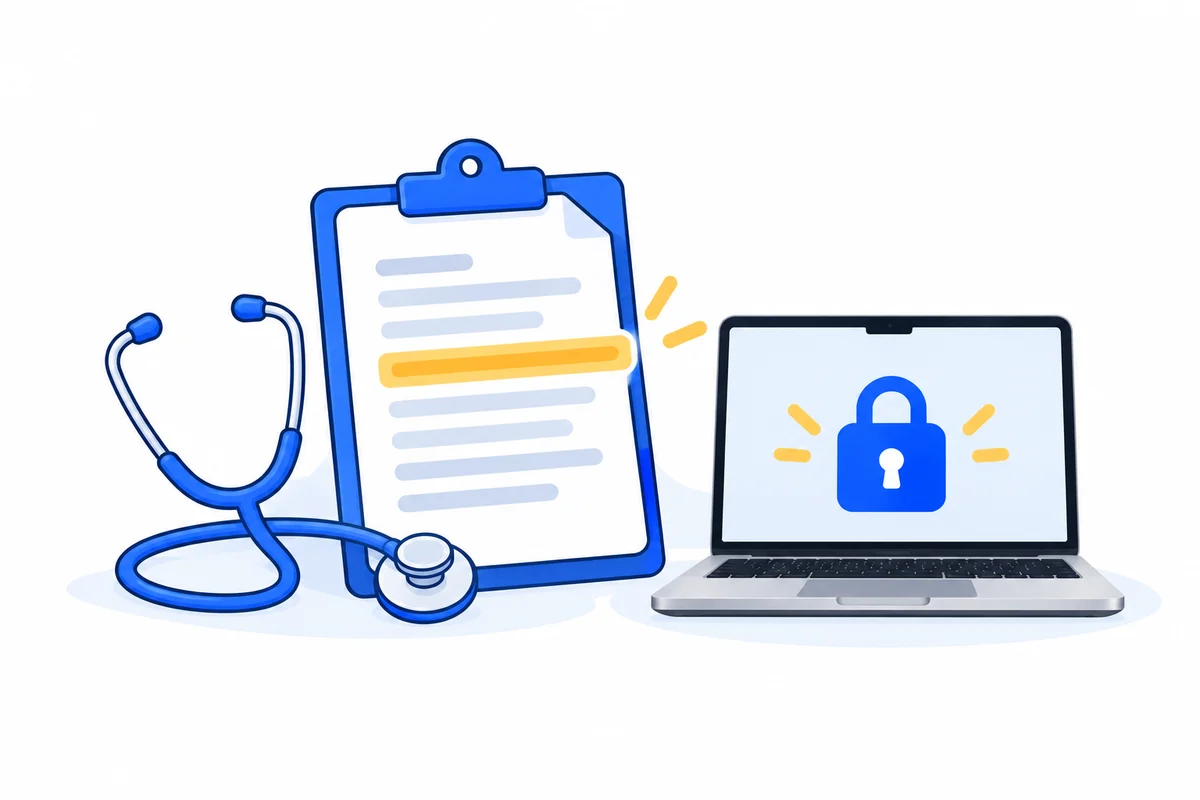
"When was she referred, and why? What follow-up did the discharge summary ask for? What does our protocol say about home blood pressure readings?" The answer is in a letter, a report or a policy on your Mac, and finding it means opening file after file. Pasting patient notes into a chatbot isn't an option.
Sample answers from made-up files, to show how Citenook answers. Citenook finds what your files say; it doesn't give medical advice.
When was Mr. Patel referred to cardiology, and by whom?
Dr. Ruth Okafor referred him on 14 August 2026 for palpitations with a normal ECG1.
PDFReferral letter, R. Patel · page 1
What follow-up did the discharge summary for Ms. Lee ask for?
A clinic review within two weeks and a repeat blood test before that visit1.
PDFDischarge summary, A. Lee · page 2 · Plan
What does our protocol say about home blood pressure readings?
Patients take two readings, morning and evening, for seven days, and the first day is left out of the average1.
DOCClinic hypertension protocol 2026 · section 3
Which supplier contract covers the ultrasound machine's servicing?
The Northline service agreement covers two visits a year and parts, renewing on 1 January1.
PDFNorthline service agreement · clause 4
Click any number in a real answer and the file opens at that page, with the sentence highlighted.
Scanned letters are read with your Mac's text recognition. Check anything you'll act on against the page, especially from faint or handwritten scans.
Use Apple Intelligence or a model on your Mac. Files, questions and answers stay on your Mac, even with Wi-Fi off. We never receive them.
Only the question and the passages picked for that answer are sent, with your own key. Names, emails, phone and ID numbers are hidden first, and you can preview exactly what goes.
Citenook isn't certified for HIPAA or similar rules. With a model on your Mac, no file content leaves it, and we never receive your files.
Under HIPAA, an online service that receives patient information on your behalf generally needs a business associate agreement. Check with your practice before using any online AI with patient files.
Apple Intelligence or a free model you download in Settings, so nothing is sent anywhere.
One brain for clinic policies, others for research or admin, so answers never mix them up.
New letters and reports are read as they arrive.
Every answer shows the sentence it came from. Read it before you act on it.
Not on a personal account: your files go to OpenAI and can be used for training unless you turn that off, and OpenAI offers a business associate agreement only for its healthcare and API products. Under HIPAA, a service that receives patient information on your behalf generally needs one. With Citenook and a model on your Mac, patient files aren't sent anywhere.
Citenook isn't certified for HIPAA. It reads files on your Mac, and with a model on your Mac nothing leaves it. Whether that fits your obligations is for your practice to decide.
No. It finds and quotes what your own files say, with the source. Clinical decisions stay with you.
Not directly. It reads files on your Mac, such as PDFs, Word documents and spreadsheets, including letters and reports exported from other systems.
Yes, on the Pro plan. Recordings are transcribed on your Mac and can then be searched and quoted like any other file.
Free for 30 days with every feature and no card. Then from $9.99 a month, or $79 a year. See pricing.
Every feature free for 30 days. No card needed.